No-Drill Splash Guard Installation: Why Factory Mount Points Matter
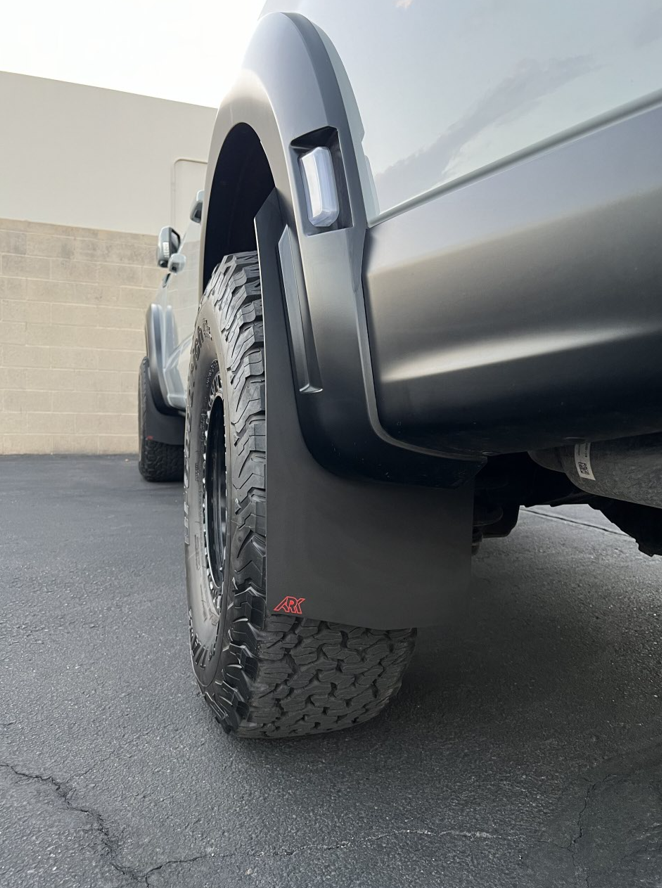
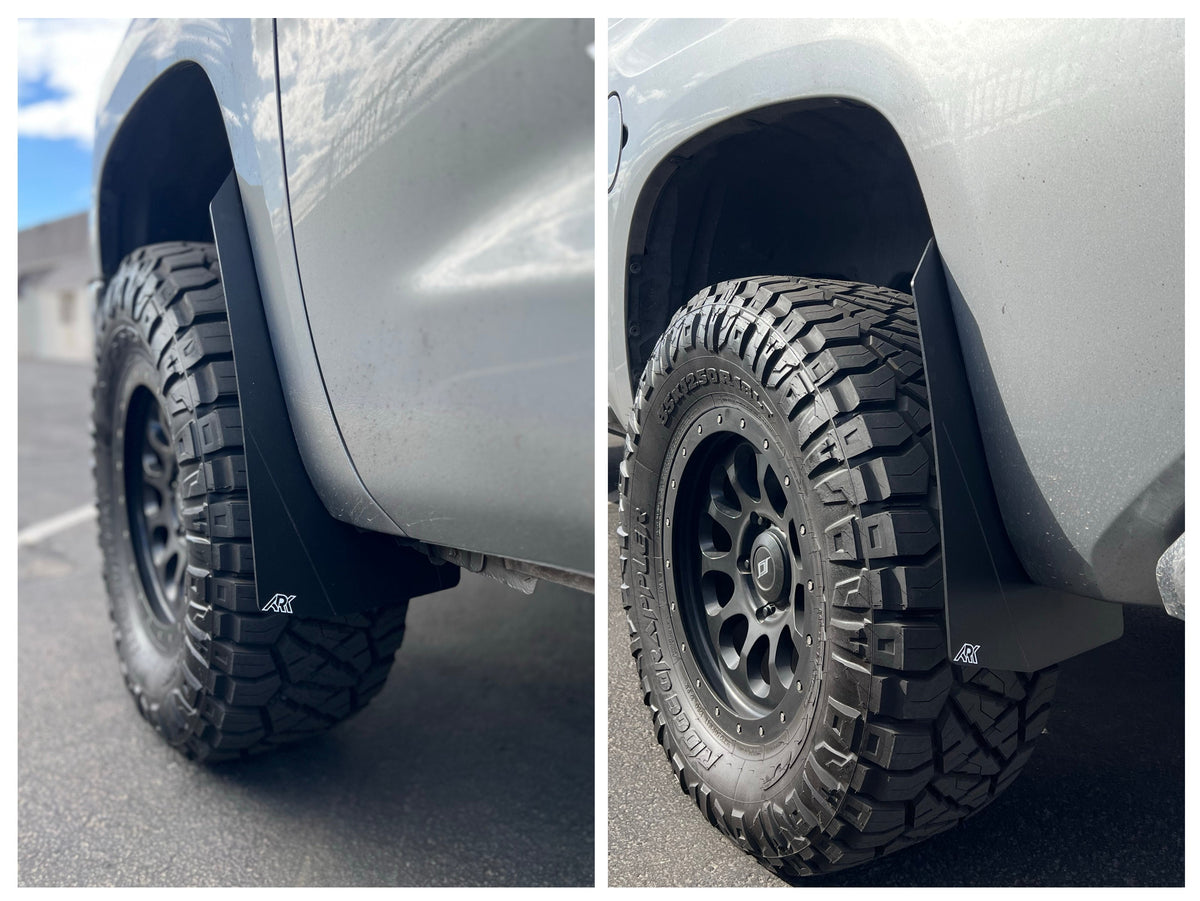
Most vehicle-specific splash guards don't require drilling. No-drill splash guard installation means the guard bolts or clips into mounting points your truck already has, like threaded holes, grommets, and fender liner clip holes, using the factory fasteners or supplied hardware. Ark designs its guards this way, so in most cases you're removing factory hardware, lining up the guard, and reinstalling it.
What Is No-Drill Splash Guard Installation?
A no-drill installation uses mounting locations the manufacturer already built into the wheel well and lower body. The guard is shaped and hole-punched to match those locations on one specific vehicle, so nothing new gets cut into the truck.
Universal flaps can't do that. Because they're built to fit many vehicles, they have no vehicle-specific reference points, and they typically install with self-drilling screws or new holes. That's the core difference: a vehicle-specific part is built around the truck, while a universal part asks the truck to adapt to it.
Do Splash Guards Require Drilling?
Vehicle-specific splash guards usually don't. Universal-fit flaps usually do. Ark's Toyota splash guards bolt directly into factory locations without drilling or modification in most cases, and other Ark fitments are designed the same way, using existing factory holes where possible.
"Most cases" is the honest phrasing, and it's worth understanding why. Trims within one model year don't always share hardware. One 2024+ Tacoma TRD Sport owner found plastic clips at the rear mounting points where other trims have bolt holes, and picked up a couple of nuts and washers to finish the job. Nothing was drilled into the truck, but it wasn't a pure bolt-on either. More on exceptions below.
What Counts as a Factory Mount Point?
Factory mount points are the fastener locations already holding your fender liners, trim, and factory flaps in place. Depending on the vehicle, they include:
- Threaded holes and grommets in the body or wheel well that accept a bolt. On Toyotas, the female OEM grommets accept both fine-thread and coarse-thread bolts, which is why Ark's supplied fine-thread hardware threads into factory locations.
- Push-clip holes in the plastic fender liner that hold the liner to the body.
- Factory mudflap locations, which mudflaps, mid mudflaps, and delete panels reuse after the OEM flap comes off.
Why Drilling Into Your Truck Is a Risk
Drilling isn't always a disaster, but every new hole trades a clean panel for a maintenance item.
- Rust starts at the edge. A drill bit cuts through paint and factory corrosion coatings, leaving raw metal at the hole edge. Unsealed, that edge is exposed to water, mud, and road salt, and the flap covering it traps moisture right where you can't see it.
- Plastic trim can crack. A hole in a plastic flare or liner is a weak point. Washboard roads and trail vibration concentrate stress there.
- It's permanent. Remove a drilled-in flap later and the holes stay. Buyers, dealers, and lease-return inspections all see them.
Using factory mount points avoids all three. Take the guard off, reinstall the factory fasteners, and the truck is back to stock.
Will Aftermarket Splash Guards Void Your Warranty?
No, not simply for being installed. According to the Federal Trade Commission's consumer alert on auto warranties, the Magnuson-Moss Warranty Act makes it illegal for companies to void your warranty or deny coverage simply because you used an aftermarket part.
There's a catch that matters here. The same FTC guidance says that if an aftermarket part was defective or wasn't installed correctly and it damages a covered part, the manufacturer can deny coverage for that damage, as long as it can show the part caused it. A drilled hole that rusts is the kind of installation-caused damage you don't want to argue about. A guard that uses factory mount points leaves nothing to argue about.
How a No-Drill Install Works, Step by Step
Most no-drill installs follow the same basic sequence. One verified buyer reported about 30 minutes to install all four TriXPoly mudflaps on a 2022+ Tundra, though your time depends on the fitment and your tools.
- Clean the mounting area. Wash out dirt and grit where the guard will sit. Grit trapped behind the guard rubs against paint.
- Remove the factory fasteners from the mounting points shown in your instructions. Use a screwdriver, trim tool, or small socket set.
- Line up the guard. The holes should meet the factory locations without forcing. If you're forcing it, check that the part is on the correct side and position.
- Install the fasteners using the supplied hardware or the factory fasteners, and snug them until the guard sits flush.
- Check clearance at full steering lock before you drive.
For tools, templates, and troubleshooting, see our complete mud flap installation guide.
No-Drill vs. Drill-In Splash Guards Compared
| Factor | No-drill (vehicle-specific) | Drill-in (universal) |
|---|---|---|
| Mounting | Factory holes, grommets, and clip locations | New holes or self-drilling screws |
| Tools | Basic hand tools | Drill and bits, plus hand tools |
| Paint and coatings | Left intact | Cut at every new hole |
| Fit | Shaped for one vehicle's wheel well | Generic shape, trimmed or adjusted to fit |
| Going back to stock | Reinstall factory fasteners | Holes remain after removal |
When a No-Drill Fit Needs a Little Extra
Vehicle-specific design gets you most of the way. Real trucks add variables, and knowing them ahead of time saves a trip to the parts store.
- Trim-level hardware differences. Some trims use clips where others use bolts, or skip a fastener entirely. If a location looks different from your instructions, stop and check before improvising.
- Broken push clips. Plastic factory clips can snap on removal. Ark sets include the clips and hardware for the install, and Ark also sells extra clips if you want spares.
- Minor hole alignment. On some older trucks, factory holes wander from truck to truck. One 2010 Tundra owner reported small adjustments to mounting holes in two spots, as the product description warned, on an otherwise clean install.
If your truck doesn't match the instructions, email Sales@Arksplashguards.com with photos before you reach for a drill.
Frequently Asked Questions About No-Drill Installation
Do splash guards require drilling?
Vehicle-specific splash guards usually don't. They're shaped to line up with factory holes, grommets, and clip locations, so you remove the factory fasteners, position the guard, and reinstall hardware. Universal flaps usually do require drilling because they have no vehicle-specific mounting points. Ark's guards install without drilling in most cases, with occasional trim-level hardware differences.
Will installing splash guards void my truck's warranty?
Not simply for installing them. The FTC says the Magnuson-Moss Warranty Act makes it illegal to void a warranty or deny coverage just because you used an aftermarket part. A manufacturer can deny coverage for damage caused by a defective part or improper installation, but it must show the part caused the problem. Using factory mount points avoids installation damage in the first place.
What tools do I need for a no-drill install?
Usually basic hand tools: a screwdriver, a small socket set, and a trim tool for plastic clips. The exact list depends on your vehicle's factory fasteners. Ark includes the hardware and instructions for each fitment. Keep a few spare push clips on hand, since plastic factory clips sometimes break when you remove them.
Can I go back to stock without leaving marks?
With a factory-mount installation, yes. Remove the guard and reinstall the original fasteners in the same holes, and the wheel well returns to stock. Because nothing was drilled, there are no holes to fill or touch up. Wash the area first so grit trapped behind the guard doesn't scuff the paint on the way out.
Do no-drill splash guards stay secure off-road?
They're designed to. Factory mount points already hold the fender liners and trim that live in the same wheel well, and a vehicle-specific guard spreads its load across several of those points instead of one new hole. Snug every fastener, check clearance at full lock, and re-check hardware after your first few trail runs.
Find the Right No-Drill Fit for Your Truck
A splash guard should protect your truck without putting new holes in it. Ark guards are designed, sourced, and manufactured in the USA, built around each vehicle's factory mount points, and backed by a 4.8/5 average across 431+ customer reviews.
Shop TriXPoly splash guards, mudflaps, and micro flares, or start with popular fitments like the 2024+ Tacoma TriXPoly mudflaps and the 2010–2024 4Runner splash guards. Don't see your truck? Request your vehicle.