Leveling Kit Mud Flap Fitment vs. a Full Suspension Lift
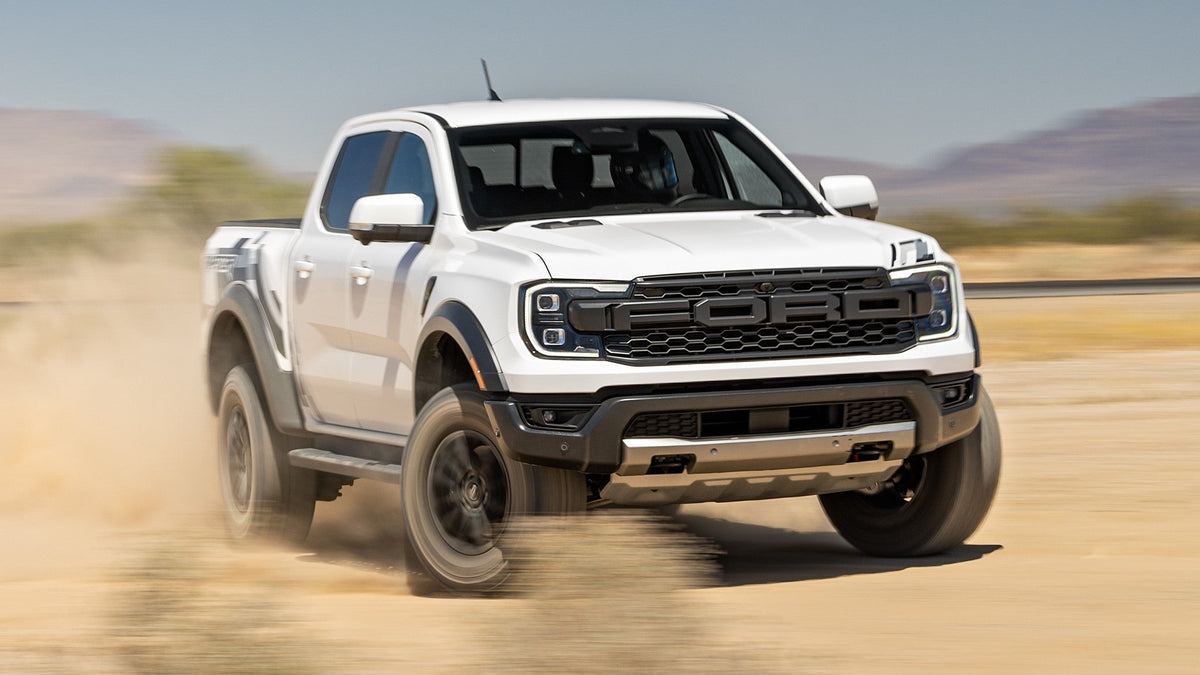
A 1–2" leveling kit rarely changes mud flap fitment on its own. Vehicle-specific mud flaps and splash guards mount to factory points on the body, and a leveling kit only raises the front suspension, so those points don't move. What usually changes leveling kit mud flap fitment is what comes with the level: bigger, wider tires and more aggressive wheel offset. A body lift is the one change that alters the fit itself.
Do Leveling Kits Change Mud Flap Fitment?
Not directly. Most trucks leave the factory with rake, meaning the nose sits lower than the tail. A leveling kit lifts the front an inch or two to even that out, and the rear stays at stock height.
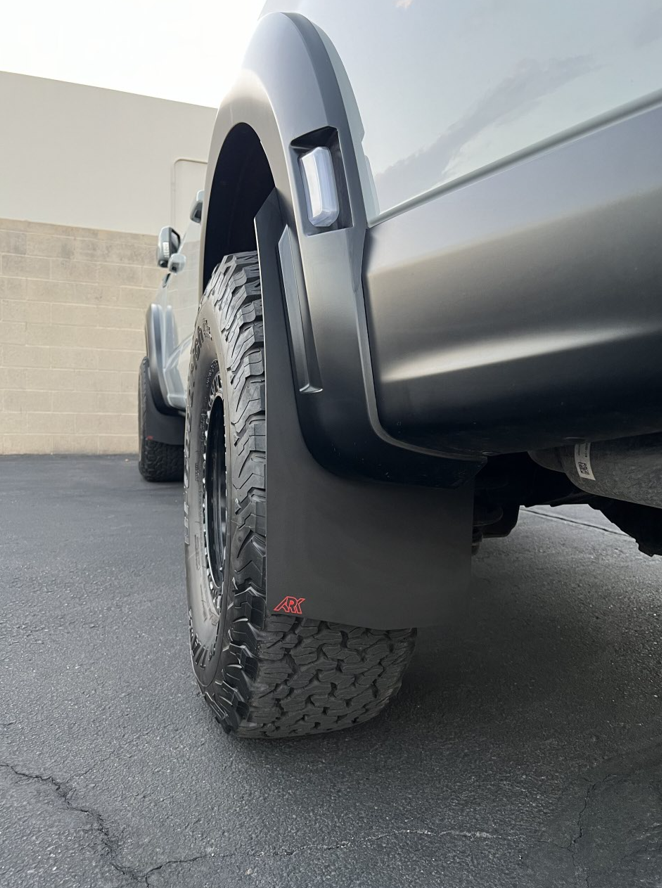
Because the flaps and splash guards bolt to the body and wheel well, the mounting points stay exactly where they were. The front flaps end up sitting a little higher off the ground, and that's about it for height. Ark builds its splash guards to fit stock vehicles, leveled vehicles, and suspension lifts of all sizes, per the Ark Splash Guards FAQ.
The fitment question gets real when the level is the first step toward larger tires. A wider tire, or a wheel with less backspacing, pushes the tread outboard. That's where flaps start to rub at full steering lock or get outrun by the tread.
Leveling Kit Mud Flap Fitment vs. a Full Lift or Body Lift
Each type of lift moves a different part of the truck, which is why they affect mud flap and splash guard fitment so differently.
| Lift type | What it raises | Effect on fitment | What to order |
|---|---|---|---|
| Leveling kit (typically 1–2") | Front suspension only | Mount points unchanged; front flaps sit slightly higher; rub risk comes from tire and wheel changes | Standard fitment for your vehicle |
| Suspension lift (roughly 2–9"+) | Suspension and frame together; body-to-frame geometry unchanged | Mount points unchanged; flaps sit higher off the ground; larger tires often need more width coverage | Stock or Suspension Lift variant |
| Body lift (roughly 1–5") | Body away from the frame on spacers | Changes body-to-frame geometry, so the gap splash guards cover changes shape | Body-lift variant matched to your lift height, where offered |
Why a Full Suspension Lift Changes Coverage More Than Fit
A suspension lift raises the frame and body together, so it doesn't change the relationship between the two. For Ark's lineup, that means the Stock or Suspension Lift version fits regardless of how tall the lift is.
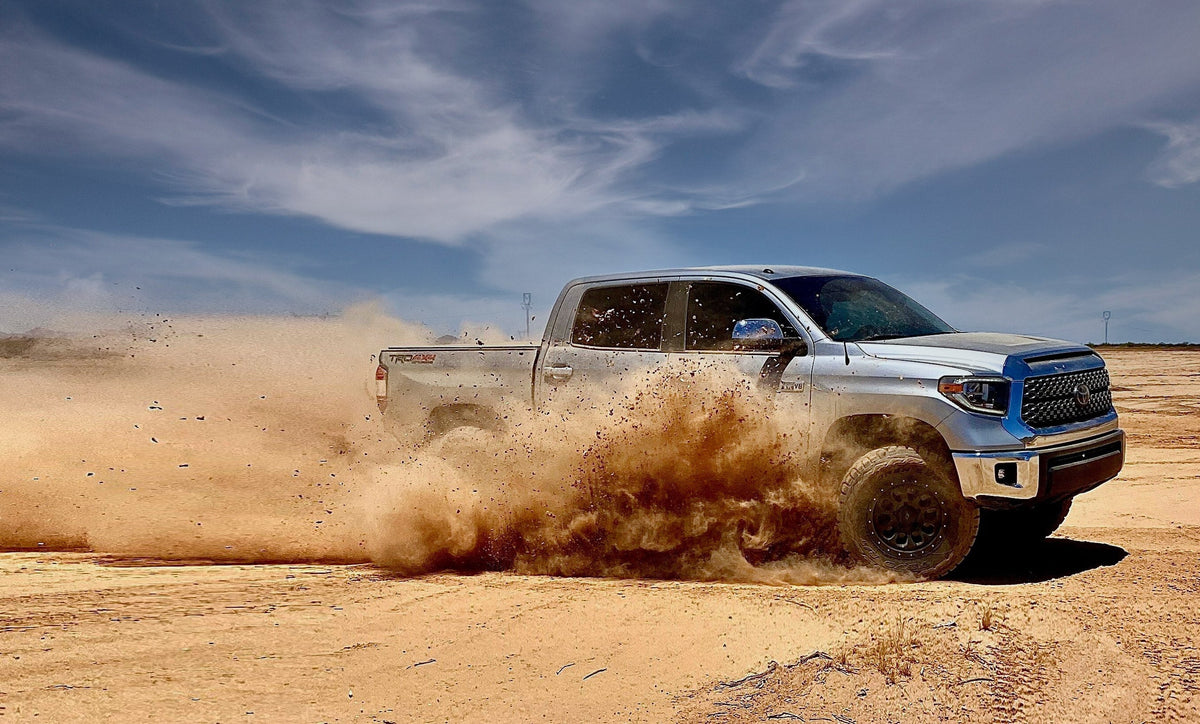
What a suspension lift does change is coverage. The whole body climbs away from the road, so every flap now ends higher above the ground than it did at stock height. Most lifted builds also add bigger tires, and a wider tread that sits outboard of a narrow flap throws rocks and mud past it.
That's why flap style matters more on a lifted truck:
- Full mudflaps give the most exterior coverage and are the usual pick for lifted trucks on big tires.
- Mid mudflaps split the difference between full coverage and a cleaner profile.
- Micro flares keep a low-profile look but cover the least tread.
Some fitments also allow adjustment for wheel offset. On the 2022–2026 Tundra TriXPoly mudflaps, for example, a verified buyer noted that slotted mounting holes let her set how far the flaps stick out to cover offset wheels. Browse the TriXPoly mudflaps, mids, and micro flares to see the options for your truck.
For deeper detail on flap width, drop length, and offset math, see our guide to choosing mud flaps for lifted trucks.
Body Lifts Are the Exception
A body lift raises the body off the frame with spacers or blocks. It makes room for bigger tires without adding ground clearance, and it changes the geometry between the body and the frame. Splash guards that close the gap behind the suspension have to match that new gap.
That's why some Ark fitments come in body-lift versions. The 2007–2021 Tundra splash guards, for instance, are offered in a Stock or Suspension Lift version and a 3" Body Lift version. If you run a body lift, pick the version that matches your lift height at checkout. If your lift height isn't listed, ask before you order.
How to Check for Tire Rub After a Level or Lift
You don't need to guess. Five checks will tell you whether a flap will clear before you order.
- Check where you already rub. Ark's rule of thumb: if your tires already rub the body mount bracket or crash bracket, or you've had a body mount chop, mid mudflaps and full mudflaps will likely rub too. If you haven't needed a body mount chop, you should be clear.
- Turn to full lock both ways. With the truck on level ground, turn the wheel fully left and right and look at the gap between the tread and the rear of the front wheel opening, where front flaps mount.
- Check under compression. A tire that clears at ride height can travel deeper into the wheel well when the suspension compresses on a trail. If you wheel your truck, check clearance flexed, not just parked.
- Measure poke. Note how far the tread sits outboard of the fender edge. The more poke, the more flap width you need to keep debris off your doors and rockers.
- Note your shocks. Running external reservoir shocks? Ark splash guards nest behind the reservoirs, so they aren't a conflict.
Bigger Tires: Check More Than Clearance
A lift or level is usually about tire size, so size the tire correctly before you size the flap. The NHTSA recommends buying tires that are the same size as the original tires or another size recommended by the vehicle manufacturer, and checking the Tire and Loading Information Label on the driver's door edge or post. It's not a small matter: NHTSA reports 511 people died in tire-related crashes in 2024.
Once your tire and wheel combination is settled, flap selection gets simple. You know the width, you know the poke, and you can pick the coverage that matches.
Frequently Asked Questions About Lifts and Mud Flap Fitment
Do leveling kits change mud flap fitment?
Not on their own. A leveling kit raises only the front suspension, and vehicle-specific mud flaps and splash guards mount to the body, so the mounting points don't move. The front flaps sit slightly higher off the ground. Fitment problems usually come from the wider tires or aggressive wheel offset that often get installed alongside the level.
Will 33-inch tires on a leveled truck rub my mud flaps?
It depends on tire width and wheel offset more than diameter. Use Ark's rule of thumb: if your tires already rub the body mount bracket or crash bracket, or you've had a body mount chop, full or mid mudflaps will likely rub too. If you haven't needed a body mount chop, you're likely clear. Check full steering lock in both directions to confirm.
Do I need different splash guards for a body lift?
Often, yes. A body lift changes the geometry between the body and the frame, which changes the gap splash guards are designed to close. Where Ark offers it, pick the body-lift version that matches your lift height, such as the 3" Body Lift option for the 2007–2021 Tundra. A suspension lift doesn't change that geometry, so the Stock or Suspension Lift version fits.
Will splash guards fit with external reservoir shocks?
Yes. Ark splash guards are designed to nest in behind external reservoir shocks on lifted suspensions, so remote-reservoir coilovers don't prevent installation. If you're running a less common long-travel setup, confirm your specific fitment before ordering.
How high off the ground should mud flaps sit on a lifted truck?
There's no single number that applies to every truck. Lower flaps catch more spray and debris, while higher flaps clear rocks, ledges, and curbs. Mud flap rules also vary by state. On a lifted truck, choose the flap length that covers your tread without dragging on the terrain you actually drive, and check your state's requirements.
Get the Right Fit for Your Build
Leveled, lifted, or body-lifted, the right guard starts with knowing which lift you have and what tires you're running. Ark splash guards and mudflaps are designed, sourced, and manufactured in the USA, built around factory mounting points, and backed by a 4.8/5 average across 431+ customer reviews.
Running a lift height or setup you don't see listed? Request your vehicle or setup, or email Sales@Arksplashguards.com with your truck, lift, and tire size.