TriXPoly vs. Rubber Mud Flaps: Which Material Is Right for Your Rig?
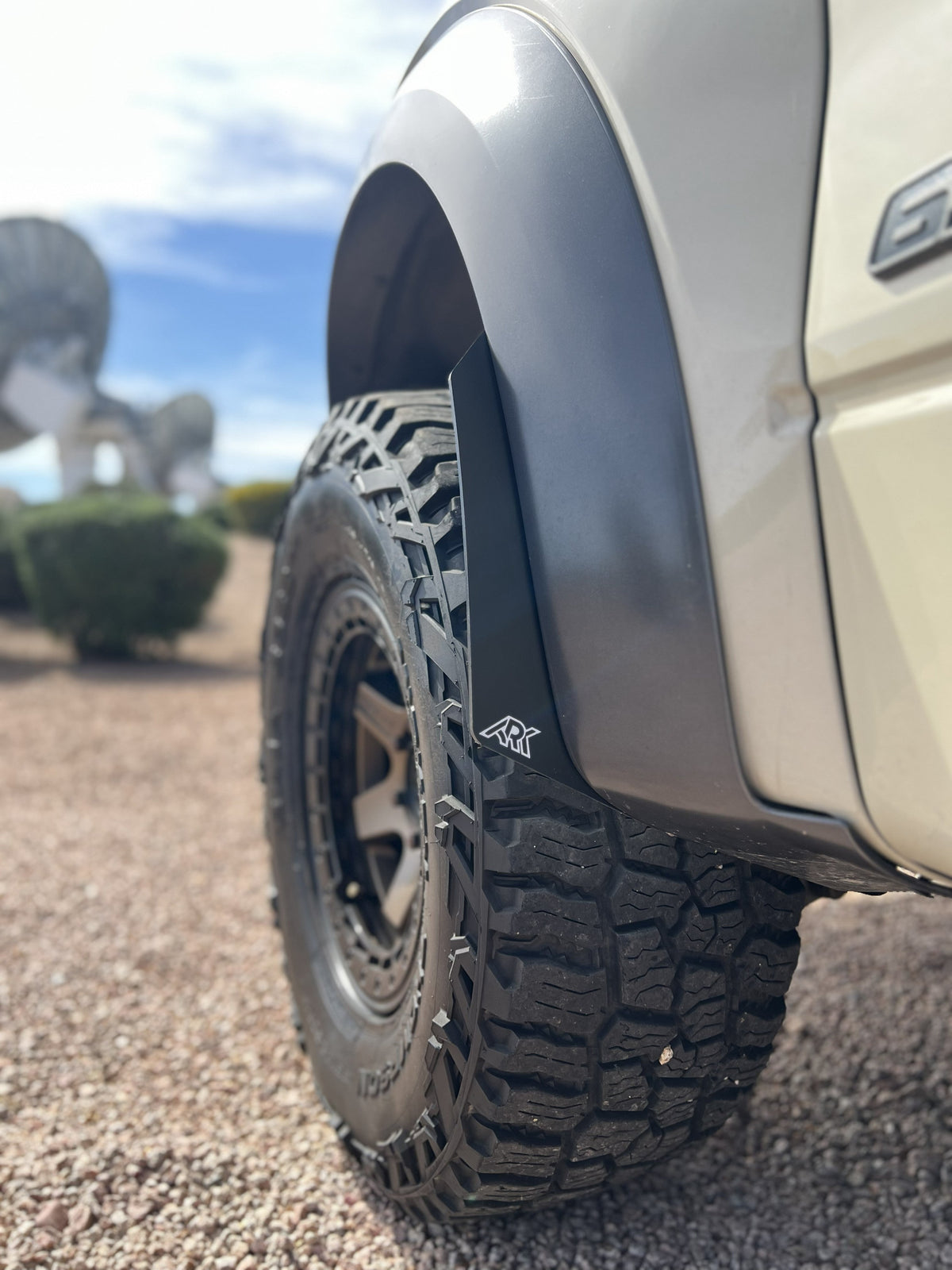
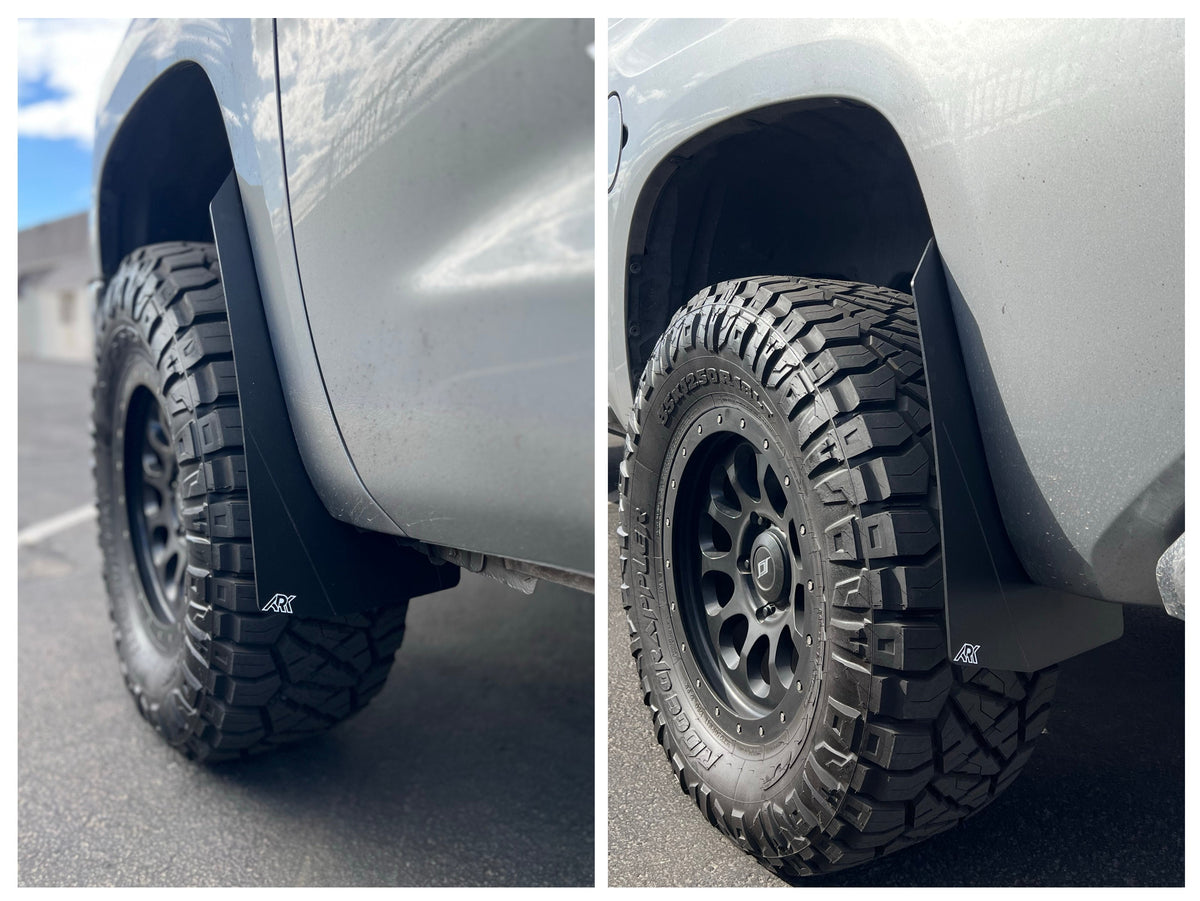
TriXPoly is Ark's newer high-performance poly blend, built to flex over obstacles, hold up to heat and cold, and carry custom logo colors. Rubber is Ark's original material: a 1/8" thick, high-durometer rubber blend chosen for maximum rigidity. In the TriXPoly vs. rubber mud flaps decision, rubber is Ark's original splash guard material, while TriXPoly covers splash guards and every exterior flap style.
TriXPoly vs. Rubber at a Glance
| Attribute | Rubber | TriXPoly |
|---|---|---|
| Material | Original synthetic rubber blend | Proprietary poly blend (high-performance plastic) |
| Published spec | 1/8" thick, high durometer | Thickness and hardness not published |
| Ark field test | 4+ years on a 2017 Tundra, no cracking or degradation | 2 years on a Tacoma, no impact on body roll or engine temperatures |
| Made as | Splash guards (the gap behind the suspension) | Splash guards, mudflaps, mid mudflaps, micro flares, deletes |
| Color | Black | Black base with a choice of logo colors |
| Coverage | 1-year no-questions-asked refund policy | Lifetime warranty, plus 1-year refund policy |
What Is Ark's Rubber Material?
Rubber is where Ark started. It's a heavy-duty synthetic rubber blend, 1/8" thick, with a high durometer rating. Durometer is a measure of hardness: the higher the number, the stiffer the material resists being pressed in. That stiffness is the point. A rigid guard holds its shape against the gap it covers and doesn't flutter or fold back.
Ark tested its rubber on a 2017 Tundra for more than four years with no signs of cracking or degradation. Today, Ark's rubber is made into its original splash guards, the panels that close the open gap between the body and fender behind the suspension. On a 2007–2021 Tundra, for example, the rubber splash guards cover that exposed engine bay gap and come in Stock/Suspension Lift and 3" Body Lift versions.
What Is TriXPoly?
TriXPoly is Ark's newer material, a proprietary poly blend formulated for off-road use. Ark tested it on a Tacoma for two years and found no impact on body roll or engine temperatures.
Ark specifies TriXPoly for flexibility in cold temperatures and resistance to heat and UV. It flexes when it takes a hit instead of cracking, which matters for exterior flaps that meet rocks, ruts, and the occasional curb.
TriXPoly is also where the product range lives. It's made into splash guards, full mudflaps, mid mudflaps, micro flares, and mudflap deletes. It comes with a choice of logo colors over a black base, and Ark backs the whole TriXPoly line with a lifetime warranty.
Which Handles Heat, Sun, and Cold Better?
Both materials were chosen for extremes. Ark's rubber held up for more than four years on a 2017 Tundra without cracking. Ark formulates TriXPoly specifically for cold-weather flex and heat and UV resistance.
Sun and heat are the long-term stress on any rubber compound. NHTSA notes that exposure to sunlight and a warmer climate contribute to tire aging, particularly in the southern Sun Belt. That's research on tires, not splash guards, but the principle applies to rubber parts in general.
If your truck lives outside in a hot, sunny climate and you want the longest warranty coverage, TriXPoly has the edge. If you want Ark's most rigid, field-proven splash guard, rubber has the longest track record.
Which Material Is Better for Off-Road Use?
For exterior protection off-road, TriXPoly. Mudflaps, mids, and micro flares sit where rocks, ruts, and ledges can reach them, so a material that flexes and returns to shape is the right call. That's also why every exterior flap style Ark makes is TriXPoly.
For the gap behind the suspension, either works. Rubber brings maximum rigidity. TriXPoly brings flex, logo color options, and the lifetime warranty. Both are cut for specific vehicles, and both nest in behind external reservoir shocks on lifted suspensions.
Why Many Owners Run Both
Rubber and TriXPoly don't have to compete, because splash guards and mud flaps do different jobs:
- Splash guards keep mud, water, and road salt out of the engine bay and off exposed components behind the suspension.
- Mudflaps catch the spray and rocks your tread throws at your doors, rockers, and quarter panels.
A common setup pairs splash guards in the wheel well with TriXPoly mudflaps outside. Ark's bundle options let you mix products for a discount.
How to Choose
- Choose TriXPoly if you want exterior mudflaps, mids, or micros; you wheel your truck; you want logo colors; or you want lifetime warranty coverage.
- Choose rubber if you're buying a splash guard and want Ark's original, most rigid material with the longest field record.
- Choose both if you want the engine bay gap closed and your paint protected from tire spray.
Whichever you pick, fitment matters more than material. A vehicle-specific guard that uses factory mounting points seals better than any universal piece, no matter what it's made of. A popular example is the 2024+ Tacoma TriXPoly mudflaps, which verified buyers praise for coverage over wide tires.
Frequently Asked Questions About TriXPoly and Rubber
Which lasts longer, TriXPoly or rubber?
Both are built for years of use. Ark tested its rubber on a 2017 Tundra for more than four years with no cracking or degradation, and tested TriXPoly on a Tacoma for two years with no issues. TriXPoly carries a lifetime warranty. For long-term sun exposure and warranty coverage, TriXPoly has the edge; rubber has the longer track record.
Which is better for off-road driving?
TriXPoly, for anything on the outside of the wheel well. Exterior mudflaps, mid mudflaps, and micro flares take direct hits from rocks and terrain, and TriXPoly is formulated to flex rather than crack. For splash guards behind the suspension, either material works; rubber offers maximum rigidity, TriXPoly adds logo colors and a lifetime warranty.
Will either material void my truck's warranty?
Not simply by being installed. The FTC says the Magnuson-Moss Warranty Act makes it illegal to void a vehicle warranty or deny coverage just because you used an aftermarket part. A manufacturer can deny coverage for damage a defective or improperly installed part causes, but it must show the part caused it. Both Ark materials mount to factory points.
Which fits tighter?
Fit comes from vehicle-specific design, not material. Both rubber and TriXPoly guards are cut for one make, model, and generation and mount to factory locations. Rubber's rigidity helps it hold a flat, tight line across the gap. TriXPoly's flex lets it conform around trail contact. Choose your exact year, trim, and lift type at checkout for the best fit.
Can I mix TriXPoly and rubber on the same truck?
Yes. Many owners run rubber or TriXPoly splash guards behind the suspension and TriXPoly mudflaps behind the tires, because the two parts protect different areas. Ark's bundle options let you combine products for a discount. Just match each part to your specific vehicle and generation.
Find Your Material and Fit
Both materials are designed, sourced, and manufactured in the USA, built for specific vehicles, and backed by a 4.8/5 average across 431+ customer reviews. Compare details in the Ark Splash Guards FAQ, shop the TriXPoly collection, or browse all splash guards by vehicle.